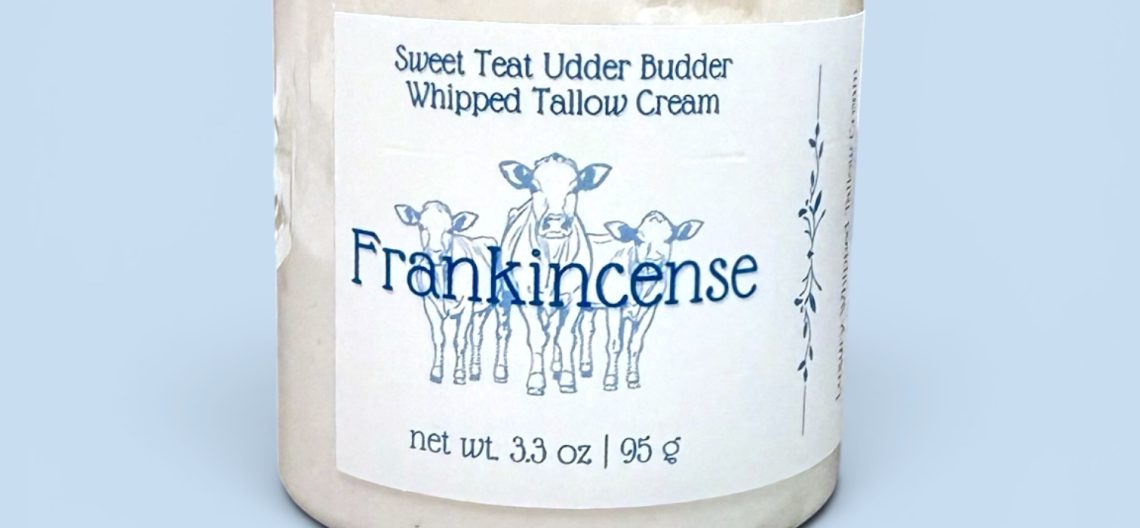
I began making a whipped tallow cream about a year ago. I have gone through many, many variations of what is now my main recipe. I also went through a few I found and did not like. The goal was to keep it as simple and uncomplicated as possible while creating all the skin benefits I wanted.
First and foremost it needed to as close to zero comedogenic as possible. Each ingredient use to make lotions and creams have a comedogenic level. Zero is the goal. The comedogenic scale is:
- 0 = will not clog pores
- 1 = very low risk of clogging pores
- 2 = low to moderate risk of clogging pores
- 3 = moderate clogging possibility
- 4 = high probability of clogging pores
- 5 = will most likely cause breakouts
There are a few other factors to keep in mind along with the comedogenic scale of oils and fats used in skin care.
How often a product is used can create different skin responses; do NOT over use a product.
What type of skin the user has; is it naturally oily or dry? Is your skin prone to clogging? Is it extra sensitive?
Do not forget any environmental factors that may come into play. Always wash your skin first to remove any dirt or sweat or possible air pollutants that may have settled on the skin.
Now, let’s talk the ingredients I use. Beef tallow sits at a level two (2) on the comedogenic scale. BUT certain ingredients it is mixed with can increase or decrease that level. Beef tallow is quite similar to human skin lipids making its much easier for our skin to absorb it and benefit from it. It locks in moisture therefore being beneficial for dry, sensitive, and oily skin types. The oleic acid helps the skin absorb nutrients and locks in moisture. The palmitic acid strengthens the skin barrier and helps prevent water loss. Because beef tallow is very low in polyunsaturated fats it resist oxidation and stays stable, unlike other fats and oils.
Castor oil has comedogenic level of zero to one (0-1). Castor oil has been known for a long time to be helpful in many ways to the human, but we are only going to discuss the skin benefits right now. Castor oil works as an emollient to help clarify the skin and form a protective layer to help lock in moisture. It also has anti-inflammatory properties that help the skin calm down irritated skin therefore promoting the healing process. The antimicrobial benefits castor oil possesses aids in protecting the skin and accelerates wound healing.
Rose hip oil has a comedogenic rating of one (1). Because of its linoleum acid level rose hip oil helps regulate sebum production. It is lightweight oil with a dry texture and has fast absorption in the skin. It is often recommended for improving skin texture and hydration.
Frankincense essential oil has a comedogenic rating of one (1). It is not only considered safe for acne prone skin it is often recommended to be used to help heal the skin. Because it is an essential oil it should never be used without being diluted. I have taken extreme care to make sure the amount of Frankincense in my whipped tallow is properly diluted in to the fats and oils used.
The kaolin clay is used quite minimally to help balance the oils by absorbing any excess and enhances the smoothing texture, body, and fullness of the whipped cream. In larger amounts kaolin clay is a gentle exfoliating agent and is one of the clays used a main ingredient in many facial masks.
I have created two varieties: Sweet Teat Udder Budder Whipped Tallow – Frankincense and Rose Frankincense. The only difference is the Frankincense has white kaolin clay and the Rose Frankincense has rose kaolin clay in its formulation.
cross post to Patreon
Notes
Comedogenic refers to the tendency of a substance to clog pores, which can lead to acne and breakouts. ↩
